




Foot and Ankle
Anatomy
Conditions
Procedures
Bunion (Hallux Valgus)
A Comprehensive Overview
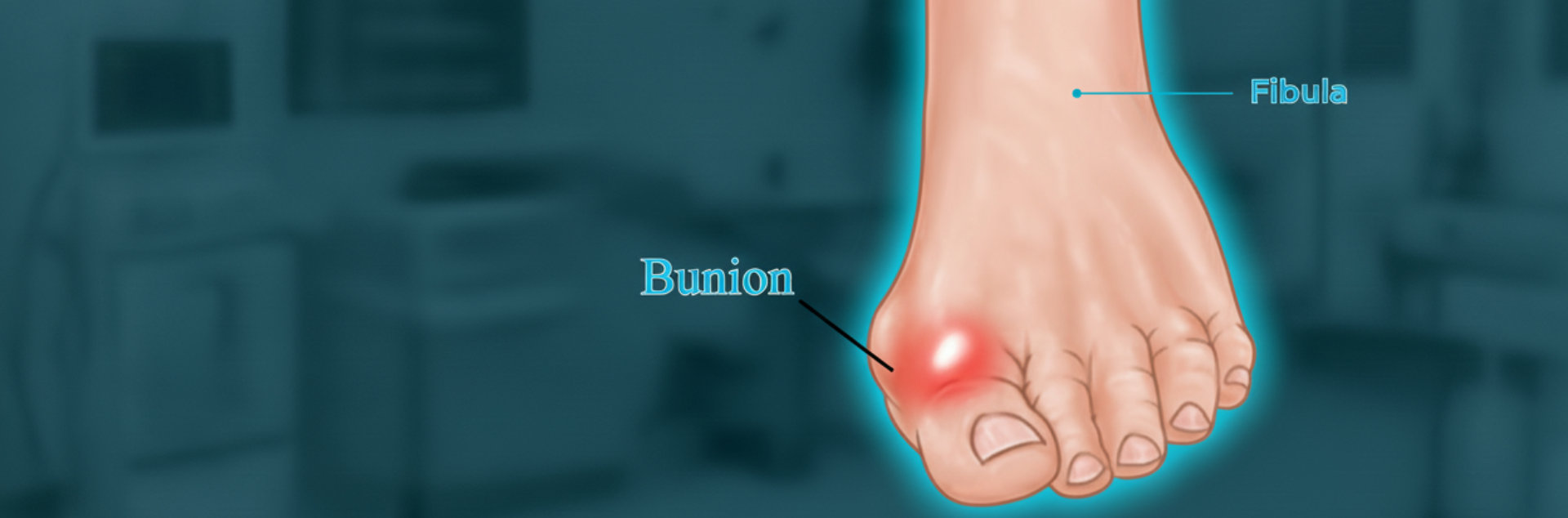
A bunion is a bony or tissue enlargement at the joint at the base of the big toe (metatarsophalangeal joint), resulting in a noticeable bump along the inner edge of the foot. Over time, the big toe may angle toward the other toes, causing discomfort, pain, and difficulty in wearing shoes.
If you notice a painful lump near the base of your little toe, this may be a bunionette or “tailor’s bunion,” a smaller yet similar condition often caused by tight or ill-fitting footwear.
How Common Are Bunions?
Bunions affect approximately 3 million people annually in the United States alone. Women are more prone to this condition, with one-third of American women reporting bunions due to hereditary factors or lifestyle choices like wearing tight shoes.
Symptoms of Bunions
- A bony bumpon the side of the big toe or little toe (bunionette).
- Redness, swelling, and tendernessat the affected joint.
- Pain during walkingor while wearing shoes.
- Toe misalignment:
- The big toe may tilt toward or even overlap the second toe.
- Advanced cases may push the second toe out of alignment, potentially overlapping the third toe.
- Skin thickeningon the sole of the foot.
- Bursitis(painful swelling and inflammation of the bursa).
- Chronic pain or arthritis in severe cases.
Types of Bunions
- Genetic Bunions:Often hereditary, appearing during teenage years.
- Acquired Bunions:Caused by lifestyle factors such as inappropriate footwear or foot injuries.
Causes of Bunions
Bunions develop from inflammation of the metatarsophalangeal joint, leading to structural changes:
- The big toe may gradually shift toward the second toe, creating a bony bump.
- Pressure on the toes or feet exacerbates the condition, causing deformities and pain.
Key Contributing Factors:
- Foot type:Inherited structural characteristics.
- Injuries:Traumatic foot injuries can disrupt alignment.
- Congenital deformities:Pre-existing foot defects.
Risk Factors and Complications
- Gender:Women are 9 times more likely to develop bunions than men.
- Family history:A genetic predisposition increases the likelihood of developing bunions.
- Rheumatoid arthritis:Affects joints, including the big toe.
- Overpronation:Inward foot rolling due to weak arches.
- Improper footwear:Shoes that are tight, narrow, or high-heeled exacerbate bunion formation.
Complications Include:
- Chronic pain and difficulty walking.
- Severe toe misalignment leading to deformities.
- Arthritis in the affected joint.
Preventing Bunions
- Choose Proper Footwear:
- Opt for shoes with a wide toe box, soft soles, and proper support.
- Avoid high heels taller than 2¼ inches and shoes with narrow toe boxes.
- Maintain Healthy Weight:Prevent undue pressure on your feet.
- Protective Measures:
- Use padding or spacers to cushion the joint and maintain alignment.
- Consider custom orthotic insoles for added support.
Treatments for Bunions
Non-Surgical Options:
- Footwear Modifications:Choose roomy and wide-width shoes.
- Orthotics and Pads:Provide cushioning and alignment.
- Pain Relief:Anti-inflammatory medications and ice packs reduce swelling.
- Physical Therapy:Stretching exercises can alleviate discomfort.
Surgical Intervention:
When bunions interfere with daily activities or cause persistent pain, surgery may be necessary.
- Surgical Goals:
- Realign the bone, ligaments, and tendons to correct the deformity.
- Restore mobility and relieve pain.
- Procedure Details:
- Most surgeries are outpatient, allowing you to go home the same day.
- Recovery typically spans 3-6 months and may involve swelling or stiffness.
When to See a Doctor
Seek medical advice if you experience:
- Persistent pain and swelling.
- Difficulty walking or performing daily activities.
- Progression of toe misalignment or visible deformity.
Conclusion
Bunions are a common yet manageable foot condition. With early intervention, lifestyle adjustments, and advanced treatment options, you can alleviate pain and restore mobility. For expert care and a personalized treatment plan, consult our specialist orthopaedic team today. We are here to help you take confident, pain-free steps toward a healthier future.