



Knee
Anatomy
Conditions / Disorders
Procedures
Femoral Torsion
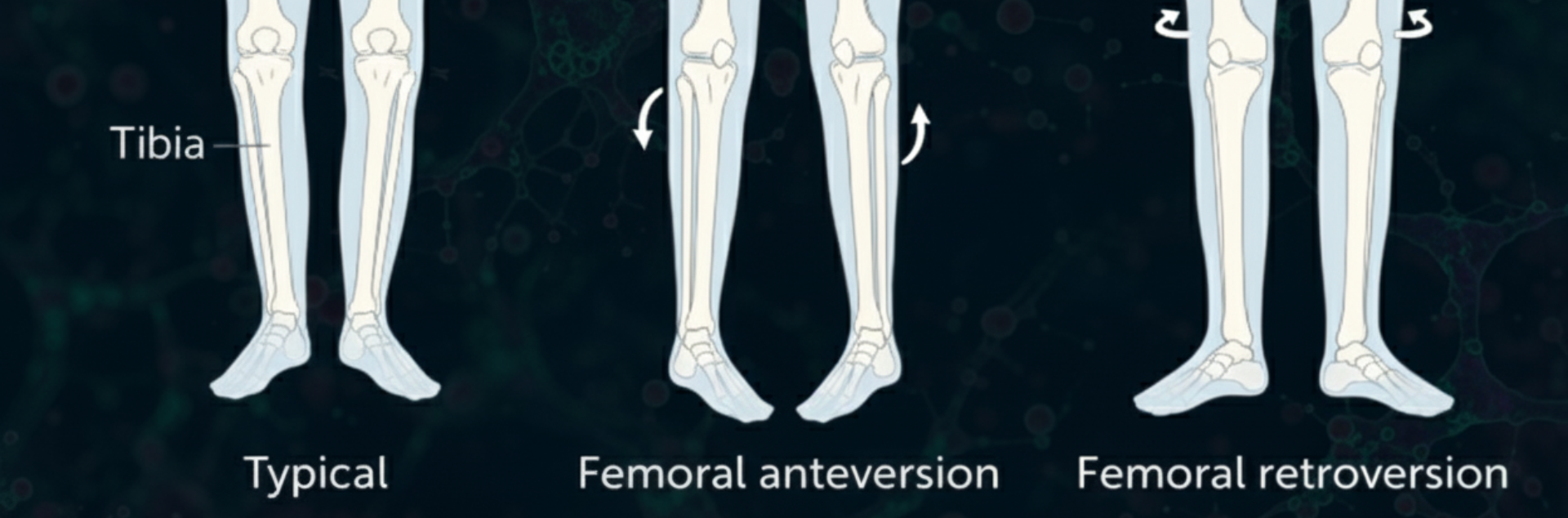
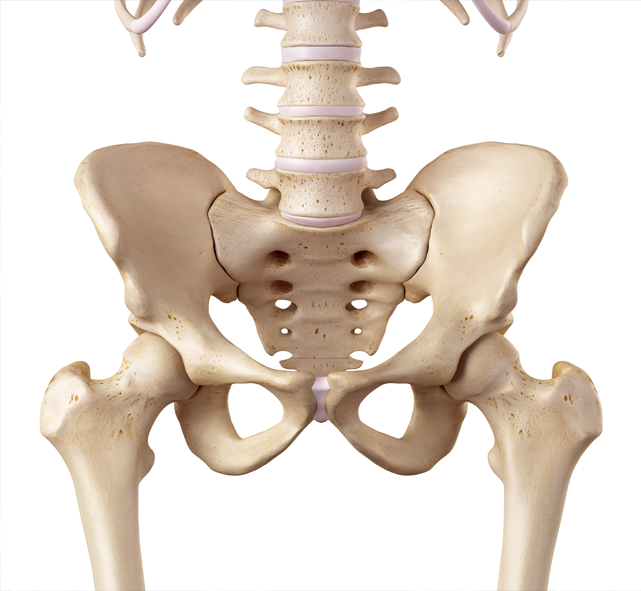
Femoral torsion, also known as femoral version, is a rotational misalignment of the femur (thigh bone). This condition affects the angle at which the femur meets the hip and knee joints, influencing the alignment of the lower limb and the way a person walks.
Types of Femoral Torsion
- Increased Femoral Anteversion:
- The femur is excessively rotated inward, causing the knees and feet to point toward each other (in-toeing).
- Commonly observed in children, particularly those under 8 years old, and often improves naturally with growth.
- Femoral Retroversion:
- The femur is rotated outward, leading to the knees and feet pointing away from each other (out-toeing).
- This condition is less common than anteversion and may persist into adulthood if not addressed.
Causes of Femoral Torsion
Femoral torsion is usually congenital and may arise from:
- Developmental Factors:Abnormal positioning in the womb or atypical bone growth during childhood.
- Genetics:A family history of torsional abnormalities can increase the likelihood of developing the condition.
- Neuromuscular Disorders:Conditions like cerebral palsy may cause or exacerbate femoral torsion.
Consequences of Femoral Torsion
Femoral torsion can lead to various issues if left uncorrected, including:
- Gait Abnormalities:In-toeing or out-toeing affects walking patterns and may cause imbalance or frequent tripping.
- Joint Strain:Misalignment increases stress on the hip, knee, and ankle joints, potentially leading to discomfort and early joint wear.
- Reduced Functionality:Severe cases may impair activities requiring coordinated lower limb movements, such as running or jumping.
Diagnosing Femoral Torsion
Accurate diagnosis is critical and typically involves:
- Clinical Examination:Evaluating the alignment of the legs, gait patterns, and joint function.
- Imaging Studies:X-rays or CT scans to measure the rotation angle of the femur and assess the severity of torsion.
Management of Femoral Torsion
Conservative Management:
- In children, femoral anteversion often resolves naturally as bones grow and realign during development.
- Non-surgical options include:
- Observation:Monitoring growth and development over time.
- Physical Therapy:Exercises to improve gait, strengthen muscles, and enhance overall limb function.
Surgical Management:
- In severe cases, especially in older children or adults, where symptoms persist or worsen, a derotation osteotomymay be recommended.
- This procedure involves surgically correcting the alignment of the femur to restore proper rotational orientation.
Prognosis
With appropriate management, most individuals with femoral torsion achieve excellent outcomes, including improved gait, reduced pain, and enhanced quality of life.