
Knee
Anatomy
Conditions / Disorders
Procedures
Rehabilitation after Anterior Cruciate Ligament Reconstruction
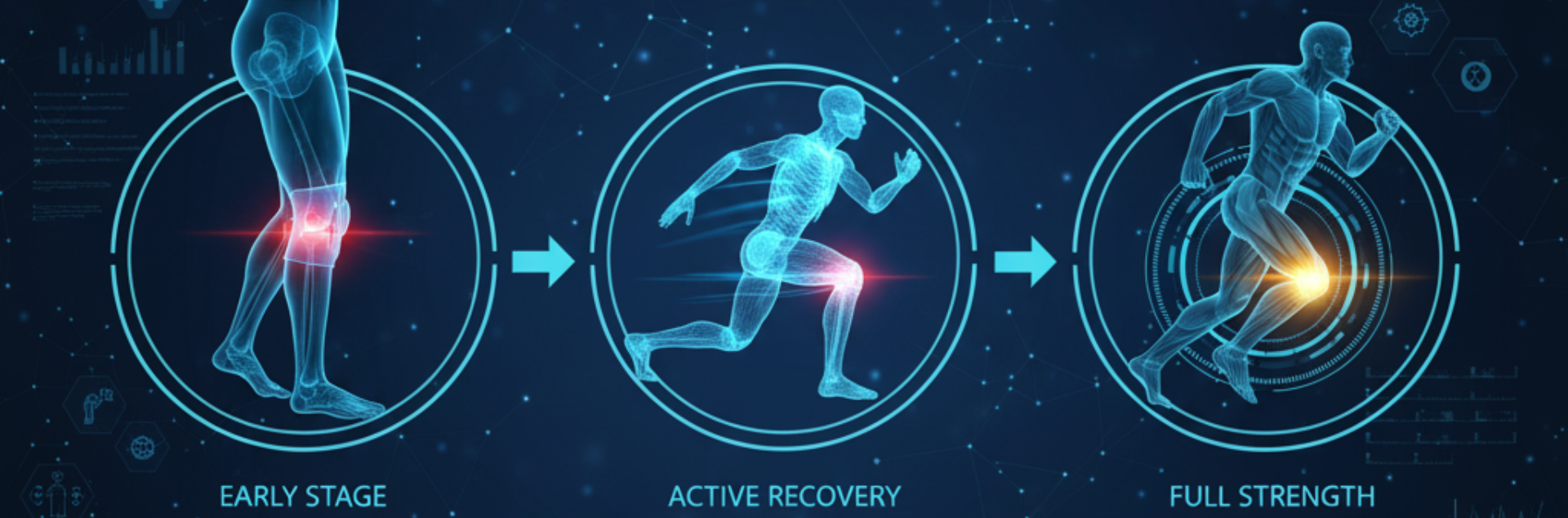
Your Road to Full Recovery
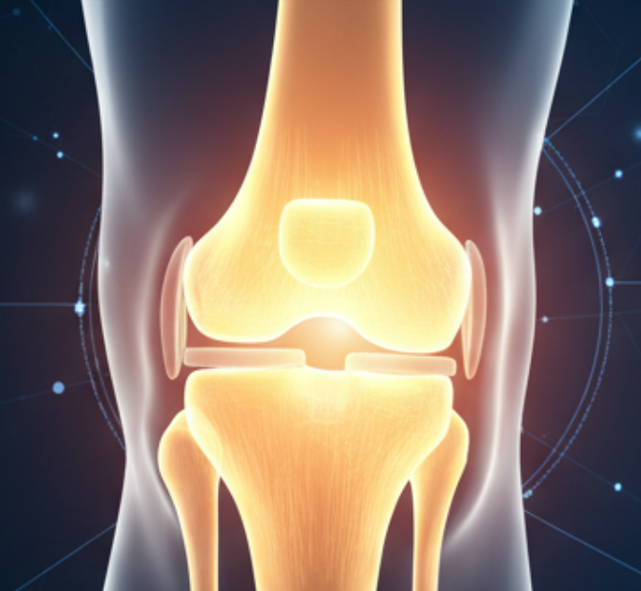
Rehabilitation is a vital part of your journey following anterior cruciate ligament (ACL) reconstruction. Using a tendon graft, your surgeon has reconstructed the ligament by securing the graft in bone tunnels created in the tibia and femur. While it takes 2-3 months for the graft to integrate with the bone and at least 3 months for blood supply to fully re-establish, the graft is strong enough during this time to support a structured, supervised rehabilitation program.
Here’s what to expect as you progress through your recovery milestones:
In-Patient Recovery
You will be discharged on the same day as your surgery or after an overnight stay. Before leaving, you will have:
- Gained initial control of your knee.
- Begun gentle bending of the joint.
Week 1: Building the Foundation
By the end of the first week, you should aim to:
- Straighten your knee fully and bend it to 90 degrees.
- Independently lift and control your leg.
- Walk with crutches, bearing partial or full weight.
- Start basic hamstring and quadriceps exercises as demonstrated by your physiotherapist.
Most patients can transition to walking without crutches within 7 days, depending on comfort and stability.
Month 1: Restoring Mobility and Strength
Outpatient physiotherapy will guide you through this phase with these goals:
- Achieve full knee straightening within two weeks.
- Regain near-normal knee bending by the end of the month.
- Begin strengthening muscles with co-contraction and closed-chain exercises.
By the end of the first month, you should:
- Be walking comfortably outdoors.
- Return to work and driving.
Month 2: Strengthening and Progression
This phase focuses on advanced muscle strengthening, particularly the hamstrings, which play a key role in knee stability. Goals include:
- Normal knee bending.
- Increased intensity of closed-chain exercises.
- Regular use of an exercise bike.
Kneeling may still be uncomfortable during this phase but should improve with time.
Month 3: Proprioception and Neuromuscular Control
Your physiotherapist will focus on restoring your body’s awareness of joint positioning and neuromuscular control. Key activities include:
- Proprioceptive exercises to enhance balance and coordination.
- Gradual introduction of gym equipment, avoiding open-chain exercises.
- Regular cycling to build endurance.
Month 4: Strength, Power, and Jogging
The emphasis shifts to rebuilding muscle strength and power. Activities include:
- Straight-line jogging, preferably on grass or soft surfaces.
- Avoiding gradients, sharp direction changes, and jumping unless supervised.
- Progressing proprioceptive exercises with agility and plyometric training.
Month 5: Agility and Fitness Recovery
This phase prepares you for more complex movements:
- Perform advanced agility and plyometric drills.
- Engage in a Prevent Injury and Enhance Performance (PEP) program.
- Restore muscle bulk, power, and fitness to near-normal levels.
Month 6 and Beyond: Return to Sport
Rehabilitation now focuses on sport-specific drills to rebuild confidence, agility, and performance. Goals include:
- Full fitness and readiness for competitive sports.
- Progressive return to ball sports, jumping, and directional changes.
Return to Competitive Sports
Returning to high-impact or competitive sports requires 9-12 months of dedicated rehabilitation, depending on your progress and activity level. For activities involving jumping, quick direction changes, or contact, you must complete a tailored return-to-sports program under expert guidance to minimize the risk of re-injury.
Achieve your recovery goals with our expert-led rehabilitation program designed to restore your strength, stability, and confidence.