




Shoulder & Elbow
Anatomy
Conditions / Disorders
Procedures
Frozen Shoulder
What is Frozen Shoulder?
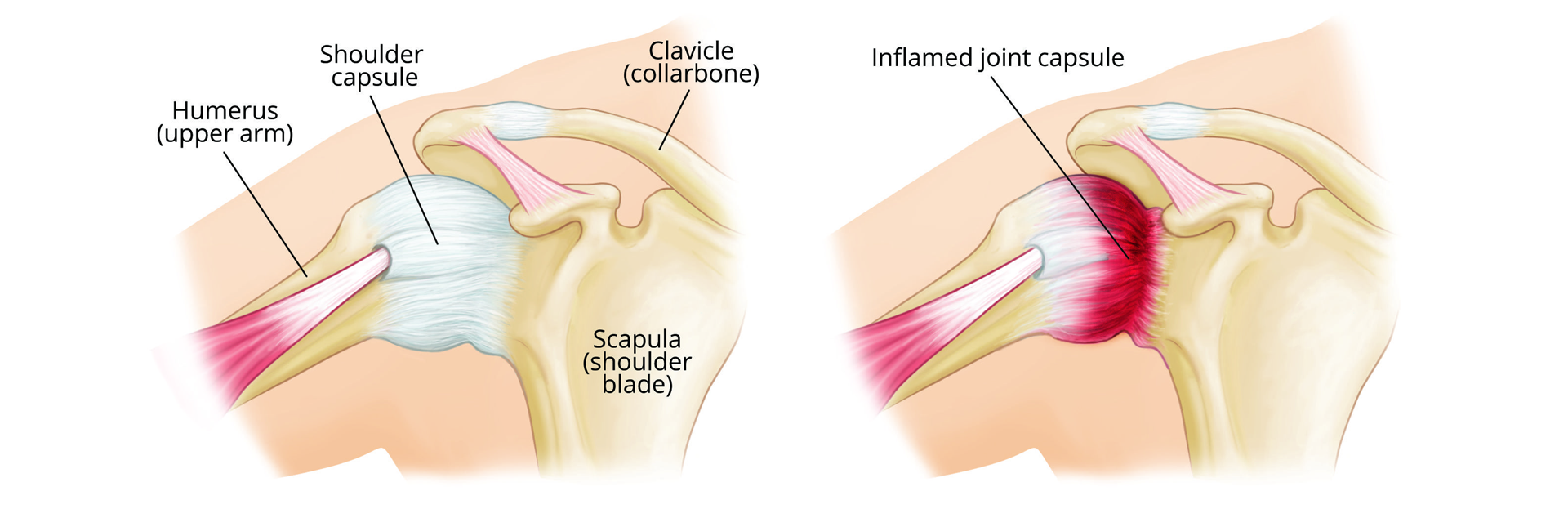
Frozen shoulder, also known as adhesive capsulitis, is a condition that leads to pain, stiffness, and limited mobility in the shoulder joint. It typically affects individuals between the ages of 40 and 60, with a higher prevalence in women than in men. The condition is characterized by the thickening and tightening of the shoulder capsule (the connective tissue surrounding the joint), which results in restricted movement and discomfort.
Causes of Frozen Shoulder
Frozen shoulder develops when the ligaments holding the shoulder bones together become inflamed. This inflammation causes the shoulder capsule to become thick, tight, and stiff, leading to the formation of adhesions (bands of scar tissue) inside the joint. Risk factors for frozen shoulder include:
- Previous Shoulder Injury or Surgery: Any injury or surgery that leads to prolonged immobilization of the shoulder can trigger the condition.
- Chronic Health Conditions: Conditions such as diabetes, hypothyroidism, hyperthyroidism, Parkinson’s disease, and certain cardiovascular diseases increase the likelihood of developing frozen shoulder.
Symptoms of Frozen Shoulder
The primary symptoms of frozen shoulder are pain and stiffness, which typically develop gradually. As the condition progresses, the shoulder becomes increasingly difficult to move. Common symptoms include:
- Pain in the shoulder joint, especially when moving the arm
- Limited range of motion, making daily activities difficult
- Night pain or discomfort, particularly when lying on the affected side
- Swelling and tenderness in the shoulder
Diagnosis of Frozen Shoulder
Frozen shoulder can usually be diagnosed based on the patient’s symptoms and a physical examination. Imaging studies such as X-rays or MRI scans may be used to rule out other conditions and confirm the diagnosis. MRI is particularly useful in identifying the characteristic thickening and stiffness of the shoulder capsule.
Treatment Options for Frozen Shoulder
Conservative Treatments:
In the early stages of frozen shoulder, conservative treatments are often effective in reducing pain and restoring mobility. These may include:
- Medications: Non-steroidal anti-inflammatory drugs (NSAIDs) or steroid injections can help relieve pain and reduce inflammation.
- Physical Therapy: A tailored physical therapy regimen can help improve the shoulder’s range of motion and prevent stiffness.
- Heat Therapy: Applying heat to the affected area may help alleviate pain and promote muscle relaxation.
Surgical Treatment:
In cases where conservative treatments fail, surgery may be recommended to remove scar tissue and release tight ligaments. The most common surgical intervention for frozen shoulder is:
- Manipulation Under Anesthesia (MUA):
MUA is a surgical procedure used to treat frozen shoulder when other treatments have not been successful. During the procedure:
- The patient is placed under anesthesia to relax the shoulder muscles.
- The surgeon moves the shoulder through its full range of motion to break up the adhesions and improve mobility.
- This procedure can significantly reduce pain and increase range of motion in the shoulder.
- Benefits: MUA can offer immediate pain relief and restore movement.
- Risks: Although generally safe, there is a small risk of vascular or nerve injury, damage to the cartilage, or even a fracture of the humerus.
- Shoulder Arthroscopy: This minimally invasive procedure involves small incisions through which an arthroscope is inserted to remove scar tissue and release tight ligaments. This surgery is typically followed by physical therapy to restore full range of motion and strength to the shoulder.
We offer comprehensive care for patients with frozen shoulder, utilizing both conservative and surgical options to treat the condition. If you are experiencing shoulder pain or stiffness, schedule a consultation today to discuss your treatment options and take the first step toward recovery.