






De Quervain’s Tenosynovitis
Pain at the thumb side of your wrist? It could be De Quervain’s Tenosynovitis, a condition caused by swelling of the tendons that control thumb movement.
What Happens?
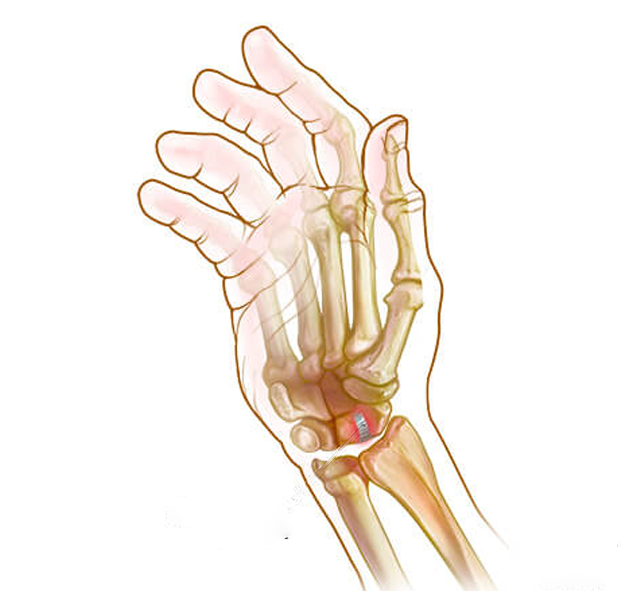
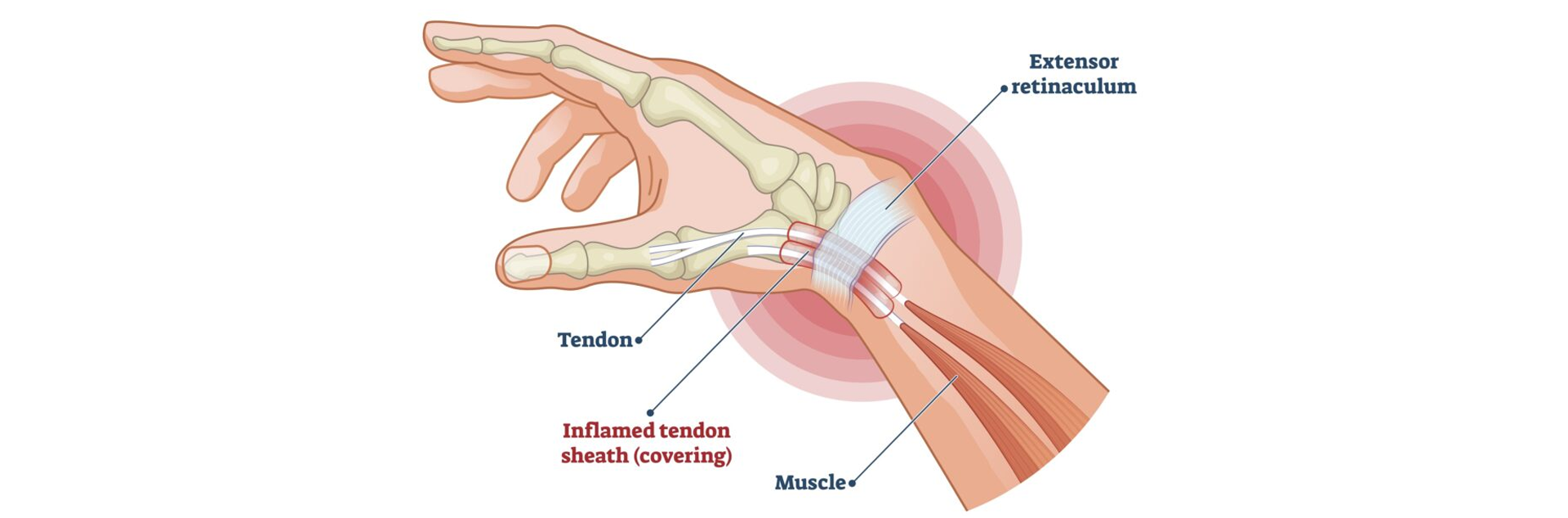
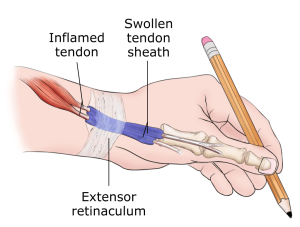
The tendons that straighten and move the thumb (abductor pollicis longus & extensor pollicis brevis) pass through a tight sheath near the wrist. When these tendons get inflamed or the sheath thickens, it creates friction, pain, and swelling.
Who Gets It?
- People who overuse their wrist/thumb (typing, lifting, sports, repetitive work)
- New mothers (from lifting babies)
- People with rheumatoid arthritis
- Most common in women aged 40–50 years
Symptoms
- Sharp pain on the thumb side of the wrist (worse when gripping, lifting, or twisting)
- Swelling near the wrist, sometimes with a small cyst
- Pain spreading up the forearm
- Catching/snapping feeling when moving the thumb
- Difficulty moving the wrist and thumb during daily tasks
Diagnosis
Often diagnosed with a simple clinical test called the Finkelstein test (pain when bending the thumb across the palm and moving the wrist).
Treatment Options
Most patients improve with non-surgical management:
- Rest & activity modification – avoid repetitive thumb/wrist use
- Splinting – thumb spica splint to immobilize and allow healing
- Ice & anti-inflammatory medications (NSAIDs) – reduce swelling and pain
- Steroid injection – highly effective in reducing inflammation inside the tendon sheath
- Physiotherapy – stretching & strengthening exercises once pain settles
If symptoms persist despite these treatments, surgical release may be required. In this procedure, the surgeon carefully releases the tight sheath to give the tendons more space, relieving pain and restoring smooth movement.
Key Message
Early treatment of De Quervain’s Tenosynovitis can prevent chronic pain and loss of function. Most patients recover fully with simple measures or a minor procedure if needed.
