




Shoulder & Elbow
Anatomy
Conditions / Disorders
Procedures
Tennis Elbow
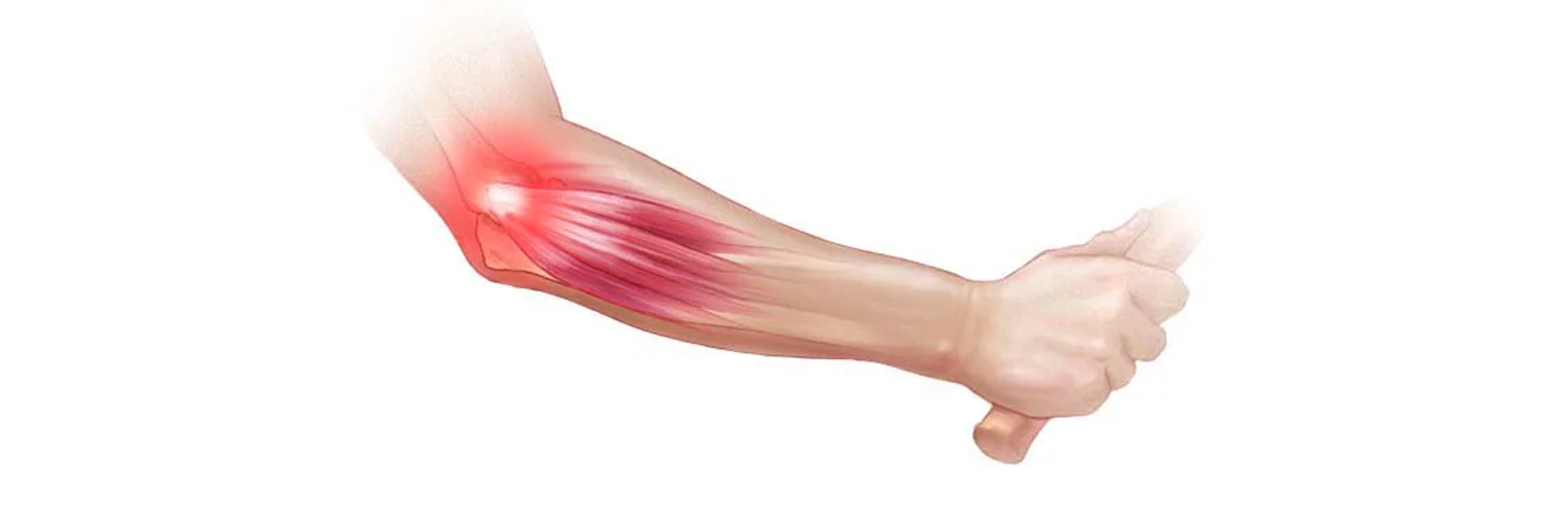
What is Tennis Elbow?
Tennis elbow, medically known as lateral epicondylitis, is a common overuse injury affecting the tendons that attach to the outer bony prominence of the elbow (lateral epicondyle). Repeated forearm muscle contractions lead to inflammation and micro-tears in these tendons, resulting in pain and functional limitations. While commonly associated with sports like tennis, it can also occur in activities such as typing, painting, gardening, hammering, and playing musical instruments.
Symptoms of Tennis Elbow
Patients with tennis elbow often experience:
- Pain or Burning Sensation: Localized around the outer elbow, worsening with activity.
- Weak Grip Strength: Difficulty holding or gripping objects.
- Gradual onset of symptoms, which may become debilitating over time.
Diagnosis
Diagnosis of tennis elbow involves:
- Medical History and Physical Examination: To assess symptoms and identify contributing activities.
- Imaging Tests: X-rays to rule out other conditions, MRI to evaluate tendon damage, or electromyogram (EMG) to detect nerve compression if suspected.
Treatment Options
Most cases of tennis elbow are managed with conservative treatments, and surgery is considered only if symptoms persist for 6–12 months despite these measures.
- Conservative Treatments:
- Rest and Activity Modification: Limiting activities that exacerbate symptoms.
- Splints or Braces: Reducing stress on the affected tendons.
- Ice Therapy: Applying ice packs to reduce pain and swelling.
- Medications: Anti-inflammatory drugs or steroid injections for pain relief.
- Physical Therapy: Stretching and strengthening exercises for the forearm muscles to restore function.
- Pulsed Ultrasound Therapy: Promoting blood flow and tendon healing.
- Surgical Treatment:
If conservative treatments fail, lateral epicondyle release surgery may be recommended. The procedure can be performed:
- Open Surgery: Through a single large incision.
- Endoscopic Surgery: Using smaller incisions and a camera-guided technique.
Procedure Details:
- Damaged tissue is removed, and the extensor tendon is trimmed or released and reattached to the bone.
- Scar tissue and bone spurs, if present, are also removed.
- The incision(s) are closed with sutures or surgical tape.
Post-Surgical Recovery
After surgery, patients undergo physical therapy to:
- Improve joint range of motion.
- Strengthen forearm muscles.
- Facilitate a safe return to daily activities and sports.
Expert Care for Tennis Elbow
With a focus on personalized treatment, we provide comprehensive care for tennis elbow—from conservative therapies to advanced surgical solutions. Whether you’re an athlete or engage in repetitive activities, we are committed to helping you recover and regain optimal function.
Contact us today to schedule a consultation.